I spend most of my day working with LLMs, and the models are genuinely remarkable. What is far less remarkable is the chat box we are all made to use them through.
“What’s wrong with a chatbot app like ChatGPT?” you might ask.
A chat is built to be disposable. You have a useful exchange, you work something out, and then it ends and you never really open it again.
It is also the wrong shape for the way ideas actually arrive. You have multiple follow up questions from a response ChatGPT gave you, you ask one of them and continue that thread, and you already lost the other threads you could’ve explored.
Sometimes you don’t even want AI to respond, you just want to organize your thoughts, have a scratchpad and write some notes, and then involve AI when you need to. Chatbots have no room to put a note beside an answer, or to keep a rough outline of your own and let the model fill in the parts you are unsure about.
Model lock-in is another frustrating limitation with most popular chat apps. Things as simple as having a council of models, or asking another model for a second opinion needs two different subscriptions and having two different apps open and copying and pasting all the conversation.
The problem becomes more apparent when you want to do real work. A deep dive into a topic, or studying something over the course of a semester, or any kind of research. Learning anything real takes weeks and requires organizing your thoughts and learnings over time, and the chat does not carry over. You come back to a pile of old conversations to sort through, or you start a new chat with empty context every time.
The LLMs are not the bottleneck anymore. The chat apps are.
A mindmap, it turns out, is much closer to how thinking actually works. It is a knowledge base you can branch out and grow in any direction, with all your thoughts sitting in front of you at once.
The pain is real, to the point that tools like Obsidian visualize your notes into a graph like this, so you can “see” your thoughts:
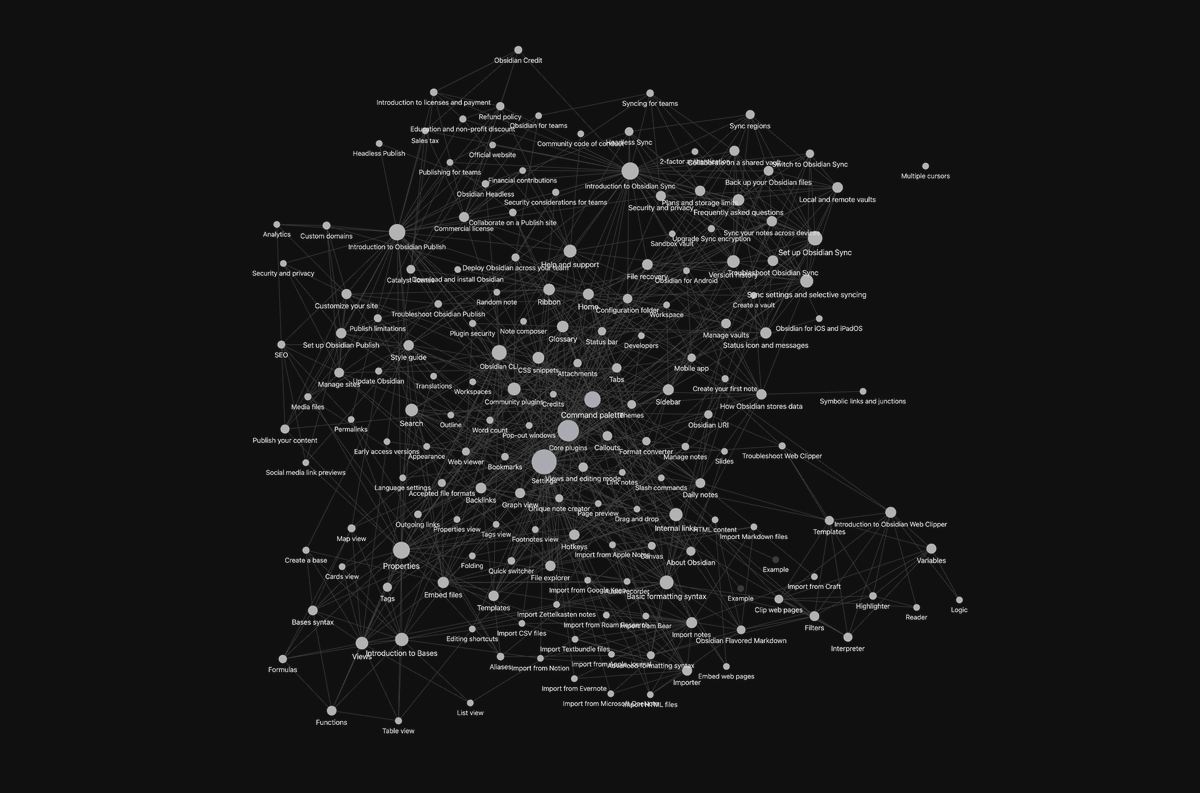
The trouble is that the mindmaps we have were designed for a world before AI. Adding a thought still means clicking and dragging and typing in everything, and the most ambitious AI capability they offer is turning text into a static mindmap diagram.
The missing piece with mindmaps is the intelligence, the conversation with LLMs. So you end up right back to leaving for ChatGPT and pasting the answers in your mindmap. And the bigger the map grows, the more it becomes a wall of boxes you cannot step back from.
I built mindmap.io to bridge this gap and bring the two together. It is, more or less, what you would get if ChatGPT and a mindmap had a baby.
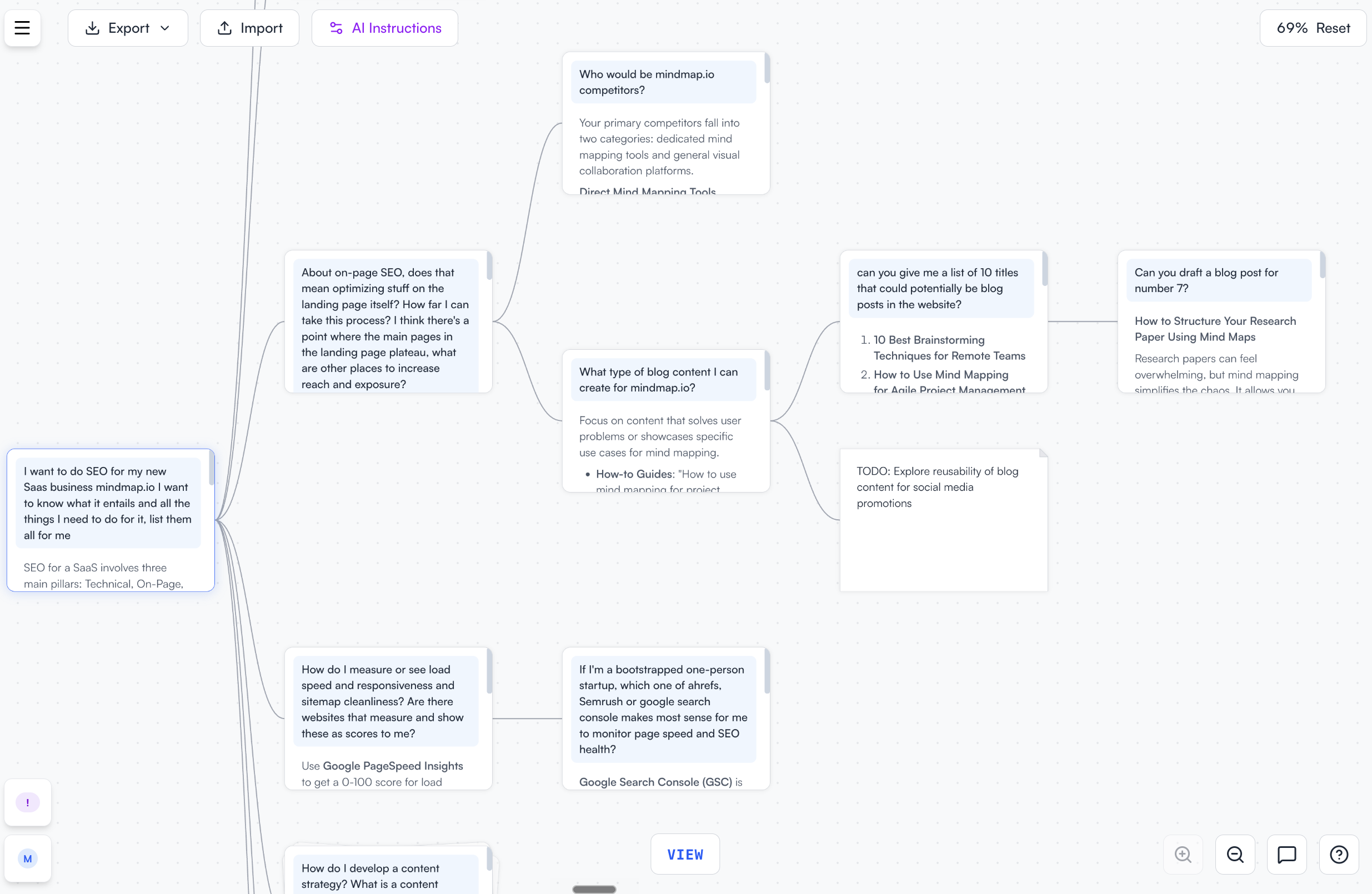
mindmap.io enables orchestrating multiple threads of conversations, all starting from a root node in a mindmap, creating something I’d like to call PromptMaps.
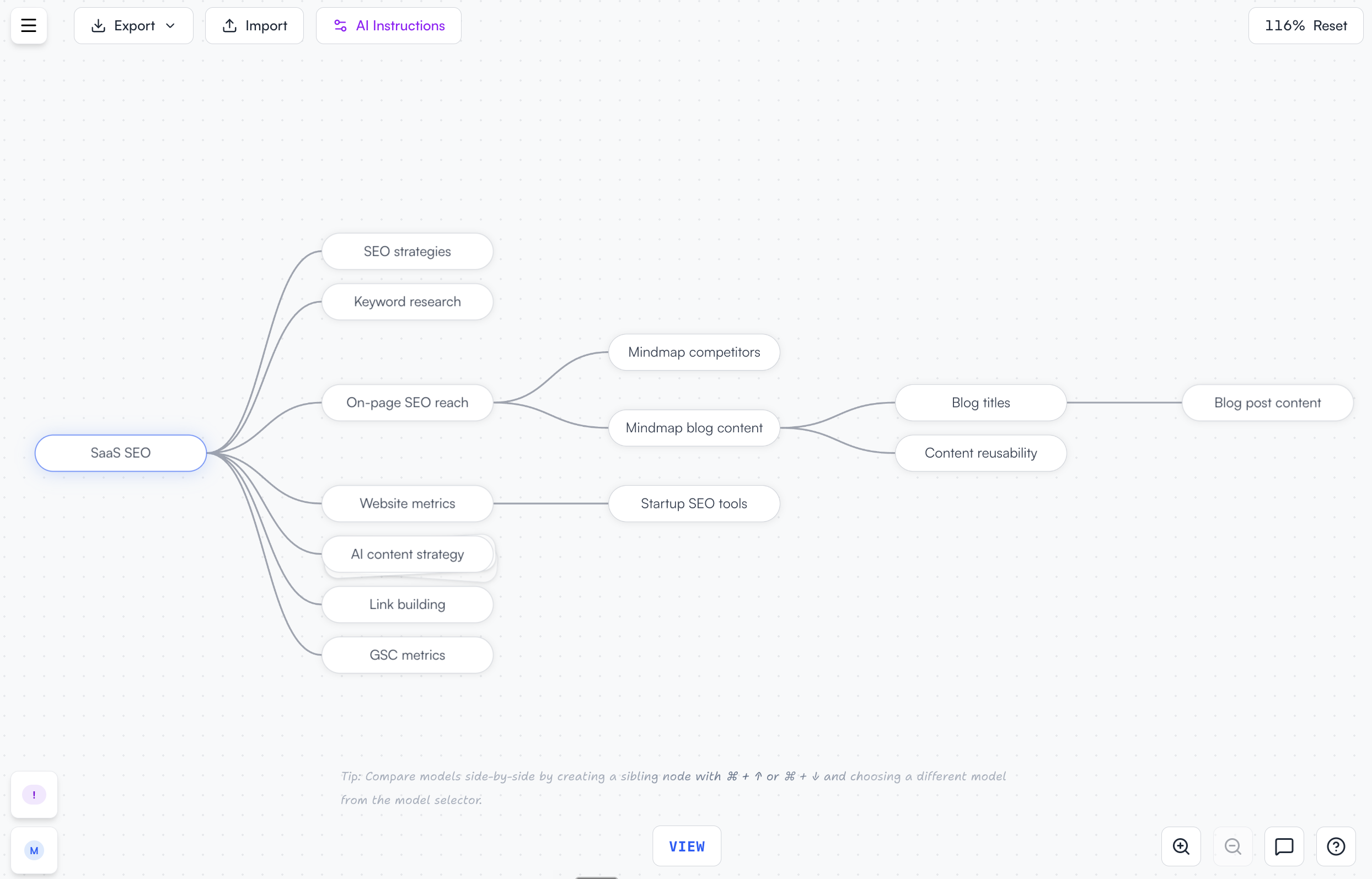
Now inevitably, your PromptMaps will grow and become hard to navigate, like any other mindmap. So the problem becomes: how do we see the big picture? Turns out AI is really good at summarizing content, so when you zoom out, the content zooms out with you.
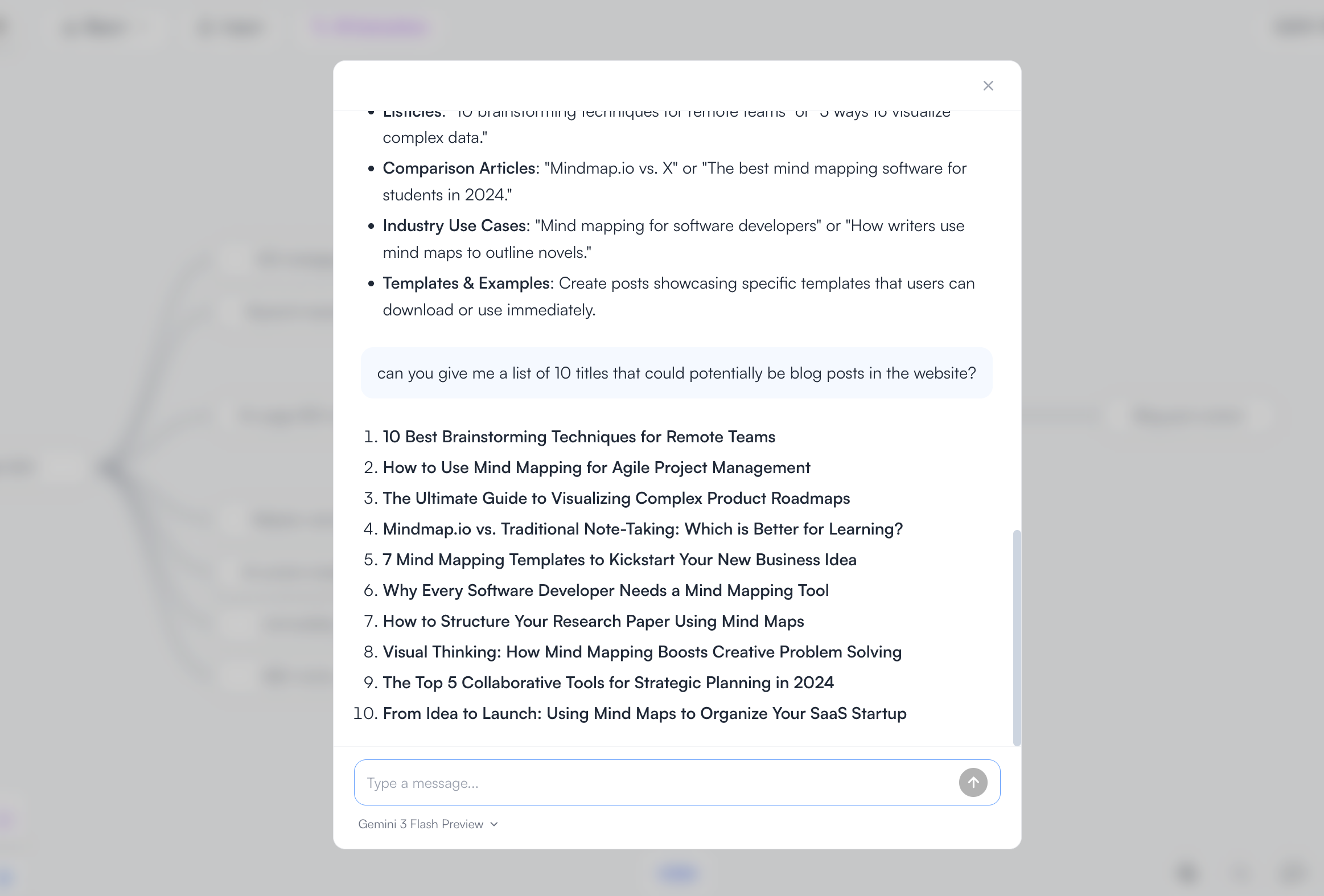
I do see the value in the simplicity of chatbots. And sometimes all you need is a chatbot and a single thread of conversation. But guess what, each path in a PromptMap is a conversation thread. So it’s very easy to have a normal conversation with any AI model you want inside mindmap.io, and when you’re done, that conversation will be a thread in your PromptMap, right where you started it.
There are many other features in mindmap.io, and these are all possible because a mindmap is a perfectly natural medium for conversations with AI.
Other mindmaps give you a picture of your thinking. mindmap.io hosts the thinking itself.